

 Back to Japanese
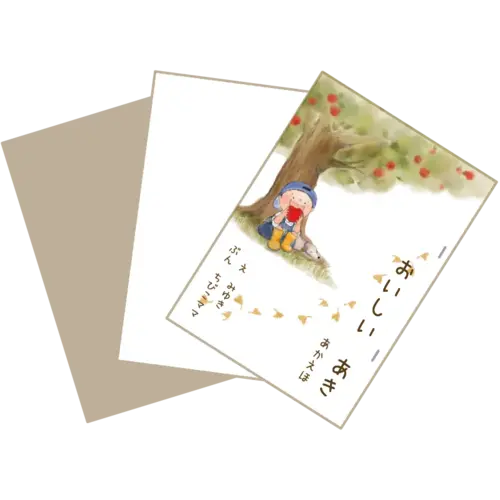
え:みゆき ぶん:ちびこママ
Tap the button to open the flip picture book (ehon).
This page doesn’t include English explanations—try reading in Japanese!
On the flip book page, you'll see four buttons to help you move through the book:
- First(さいしょ) – Go to the front cover.
- Back(もどる) – Return to the previous page.
- Next(すすむ) – Turn to the next page.
- Last(さいご) – Skip to the back cover.
The First(さいしょ), Back(もどる), and Last(さいご) buttons use arrow icons to show direction. But the Next(すすむ) button is special—it’s a little chick  ! If you're not sure which button to press, just follow the chick.
When you find a star icon with the word “おきにいり” (favorite), just tap  ! That book will be saved to your favorites, so you can find it easily next time from the Favorites page!
Prefer English support?
Scroll down to read with explanations
With a  read-aloud button!
It uses your browser’s speech feature.
A robotic voice  reads Japanese text aloud.
The picture book pages include a small navigation menu to help you explore.


On the flip book and PDF download pages, the buttons are labeled in Japanese only—but don’t worry, they’re easy to use. Just try tapping them!
- This picture book is original content by AKAEHO. The copyright of the picture book belongs to AKAEHO and the assigned illustrators.
- The PDF picture book is available for free download for use only in homes, small non-profit groups, and childcare facilities.
- Unauthorized reproduction and secondary use of the picture book and illustrations are strictly prohibited. Some of the illustrations are available for paid purchase. If you wish to use the illustrations for commercial purposes, please purchase them through the paid sites
-> Guide to Illustration Sales - Some of the picture book’s illustrations are distributed in black and white versions on our sister site, “Chibisozai.” They may be used for non-commercial purposes.
Delicious autumn vegetables. A heartwarming seasonal storybook to cozy up with.
\Reads aloud Japanse text with a robotic voice/

え:みゆき ぶん:ちびこママ
Illustration by Miyuki, Text by Chibiko Mama
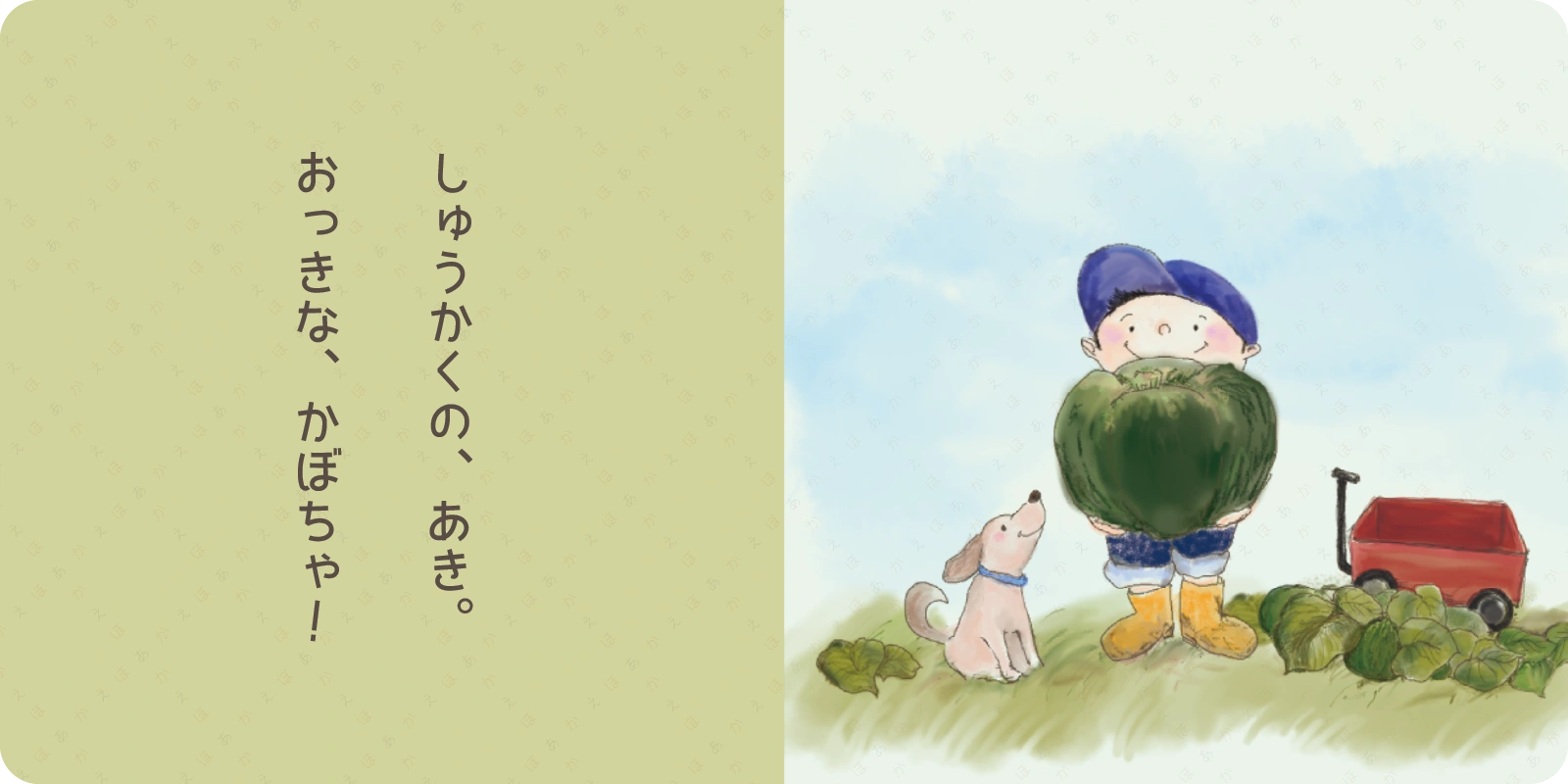
おっきな、かぼちゃ!
Wow! Big pumpkin!
いっぱい。
yummy things.

おしまい
Note to Readers: About “おいしい あき”
This simple picture book follows a cheerful little boy as he introduces the foods harvested in Japan during autumn.In just a few gentle words, this book shares the joy of seasonal beauty, the richness of autumn’s flavors, and the playful magic of language.
Here’s how the text looks when written with kanji or katakana:
おいしい あき:おいしい 秋(oishii aki) note 1
おっきな、かぼちゃ!:おっきな、カボチャ!(okkina kabocha!) Note 2
note 1 “Oishii” means “yummy”—a word usually used to describe food. In this book, I playfully paired it with “autumn” to express a child’s joyful feeling: Autumn is full of delicious things! I created this title to capture that happiness in just a few gentle words.
In Japanese, there’s a seasonal phrase: “shokuyoku no aki(しょくよく の あき、食欲の秋)”— “autumn of appetite.” It reflects the idea that autumn is full of delicious foods—and that the season naturally stirs your hunger.
Note 2 “Okkina(おっきな)” is a casual, childlike way of saying “ookina(おおきな、大きな),” which means “big” in Japanese. “Ookina” is the standard form used to describe large things, but “okkina” is often heard in everyday speech—especially from children. Even grown-ups might say “okkii!(おっきい!)” with surprise and delight when they see something unexpectedly huge.
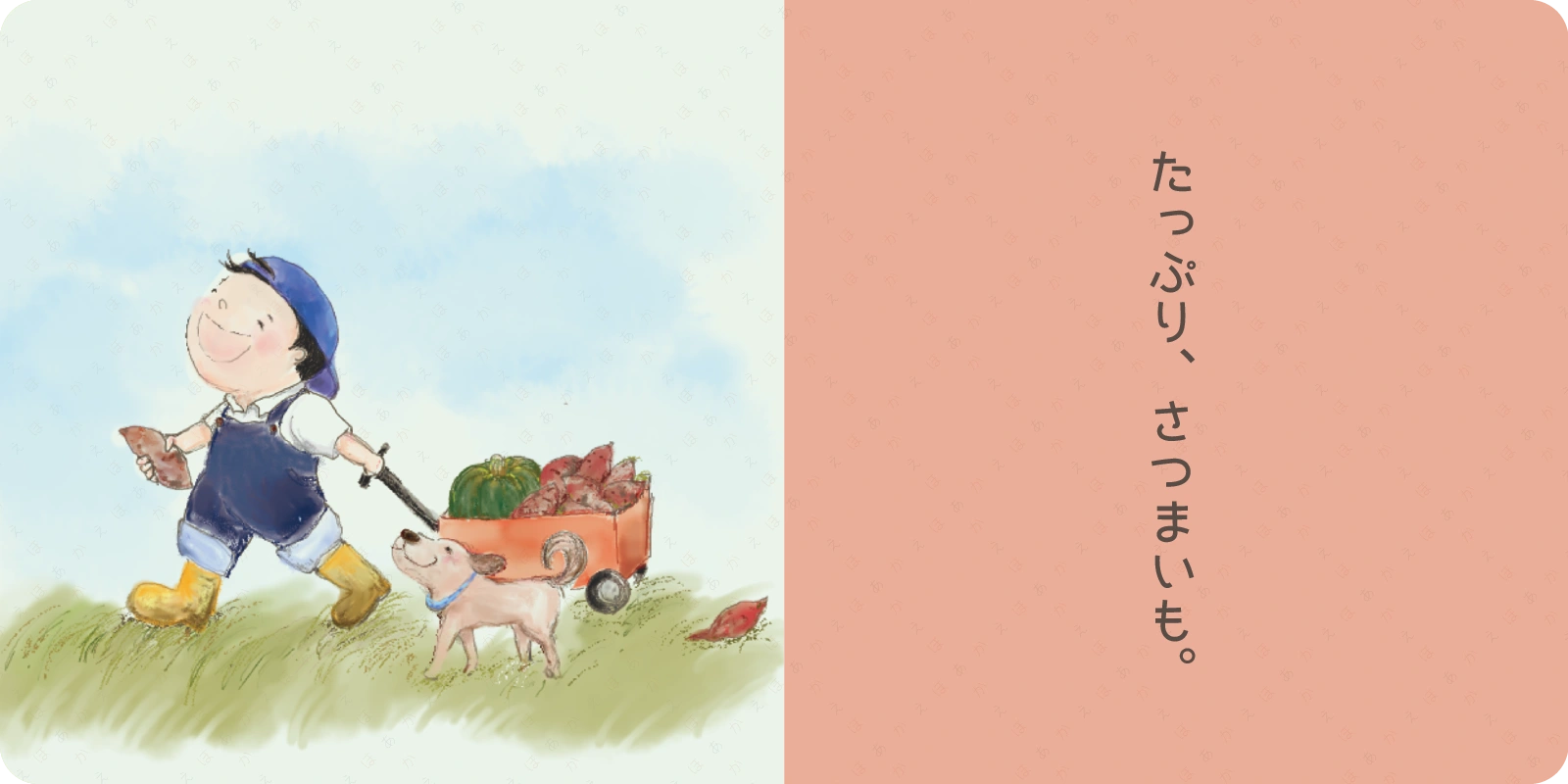
たっぷり、さつまいも。:たっぷり、サツマイモ。(tappuri satsumaimo) note 3
note 3 “Tappuri(たっぷり)” is a Japanese word that expresses abundance and a sense of generous plenty. It can describe not only things, but also time or space—like having more than enough, with room to spare.
Satsumaimo are Japanese sweet potatoes with purple skin and sweet, golden flesh. They’re a cozy autumn treat, often used in warm snacks and seasonal sweets. Just be careful—if you eat too many, they might make you a little gassy!
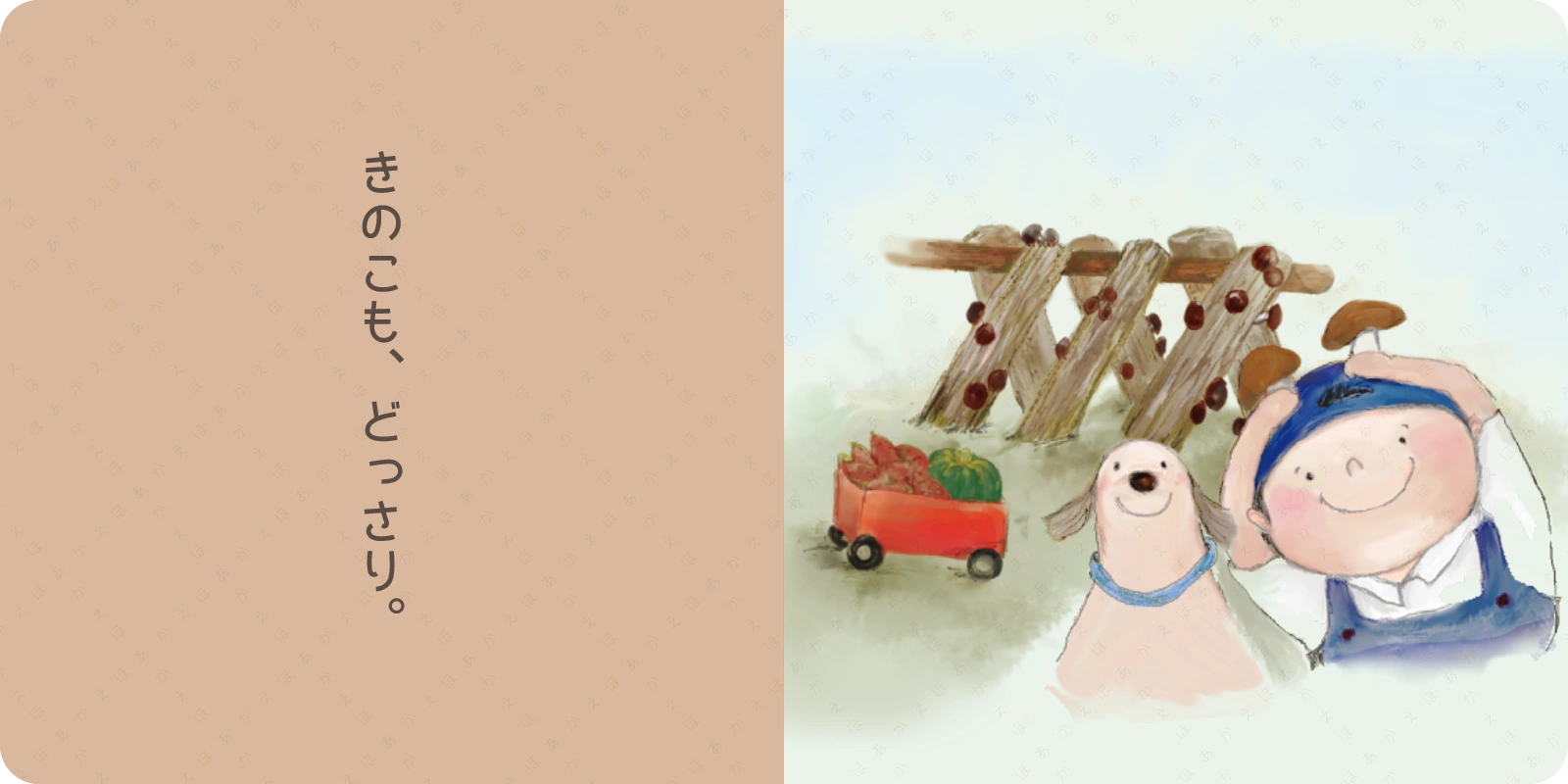
きのこ/も、どっさり。:キノコ/も、ドッサリ。(kinoko/mo dossari) note 4
note 4 “Dossari(どっさり)” is a cheerful Japanese word that means “a whole lot!” It’s used when there’s so much of something—like a big pile of apples or snacks.
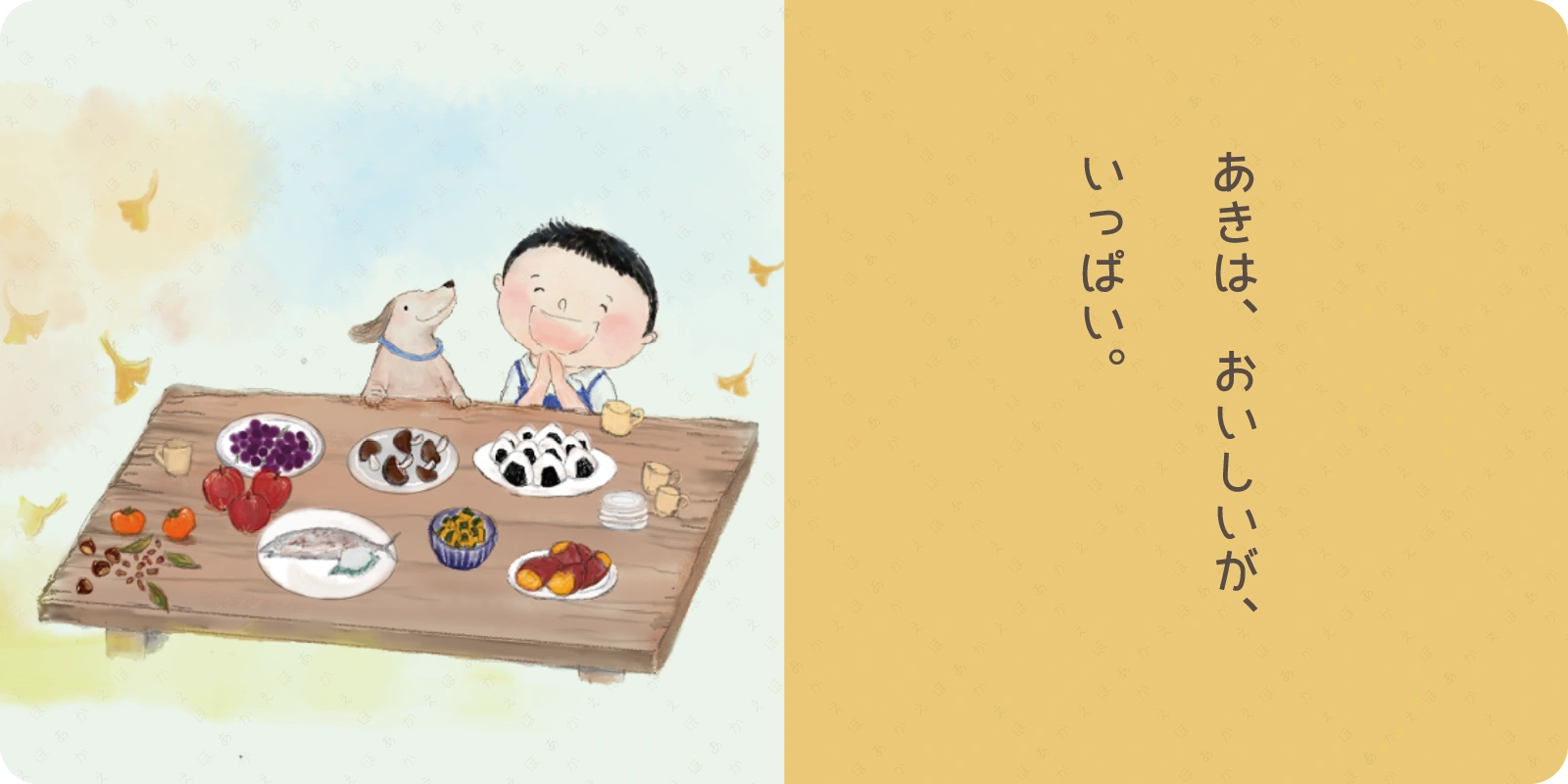
あき/は、おいしい/が:秋/は、おいしい/が(aki/wa oishii/ga) note 5
いっぱい。:(ippai) note 5
note 5 “Oishii ga ippai(おいしい が いっぱい)” means “Oishii (tabemono) ga ippai(おいしい(たべもの)が いっぱい)”—“Lots of yummy (food)!” Just like how children sometimes speak in simple or incomplete sentences, the word “food” is left out. But the feeling is clear: autumn is full of delicious things!
“Ippai(いっぱい)” is another Japanese word that shows abundance—whether it’s lots of things, time, or more.
Japanese has many playful ways to describe plenty, like tappuri, dossari, and ippai—each with its own warm and cheerful feeling.
