

 Back to Japanese
え:ちびこママ
Tap the button to open the flip picture book (ehon).
This page doesn’t include English explanations—try reading in Japanese!
On the flip book page, you'll see four buttons to help you move through the book:
- First(さいしょ) – Go to the front cover.
- Back(もどる) – Return to the previous page.
- Next(すすむ) – Turn to the next page.
- Last(さいご) – Skip to the back cover.
The First(さいしょ), Back(もどる), and Last(さいご) buttons use arrow icons to show direction. But the Next(すすむ) button is special—it’s a little chick  ! If you're not sure which button to press, just follow the chick.
When you find a star icon with the word “おきにいり” (favorite), just tap  ! That book will be saved to your favorites, so you can find it easily next time from the Favorites page!
Prefer English support?
Scroll down to read with explanations
With a  read-aloud button!
It uses your browser’s speech feature.
A robotic voice  reads Japanese text aloud.
The picture book pages include a small navigation menu to help you explore.


On the flip book and PDF download pages, the buttons are labeled in Japanese only—but don’t worry, they’re easy to use. Just try tapping them!
- This picture book is original content by AKAEHO. The copyright of the picture book belongs to AKAEHO and the assigned illustrators.
- The PDF picture book is available for free download for use only in homes, small non-profit groups, and childcare facilities.
- Unauthorized reproduction and secondary use of the picture book and illustrations are strictly prohibited. Some of the illustrations are available for paid purchase. If you wish to use the illustrations for commercial purposes, please purchase them through the paid sites
-> Guide to Illustration Sales - Some of the picture book’s illustrations are distributed in black and white versions on our sister site, “Chibisozai.” They may be used for non-commercial purposes.
Learn Katakana with a Food and Dining-Themed Picture Book
\Reads aloud Japanse text with a robotic voice/

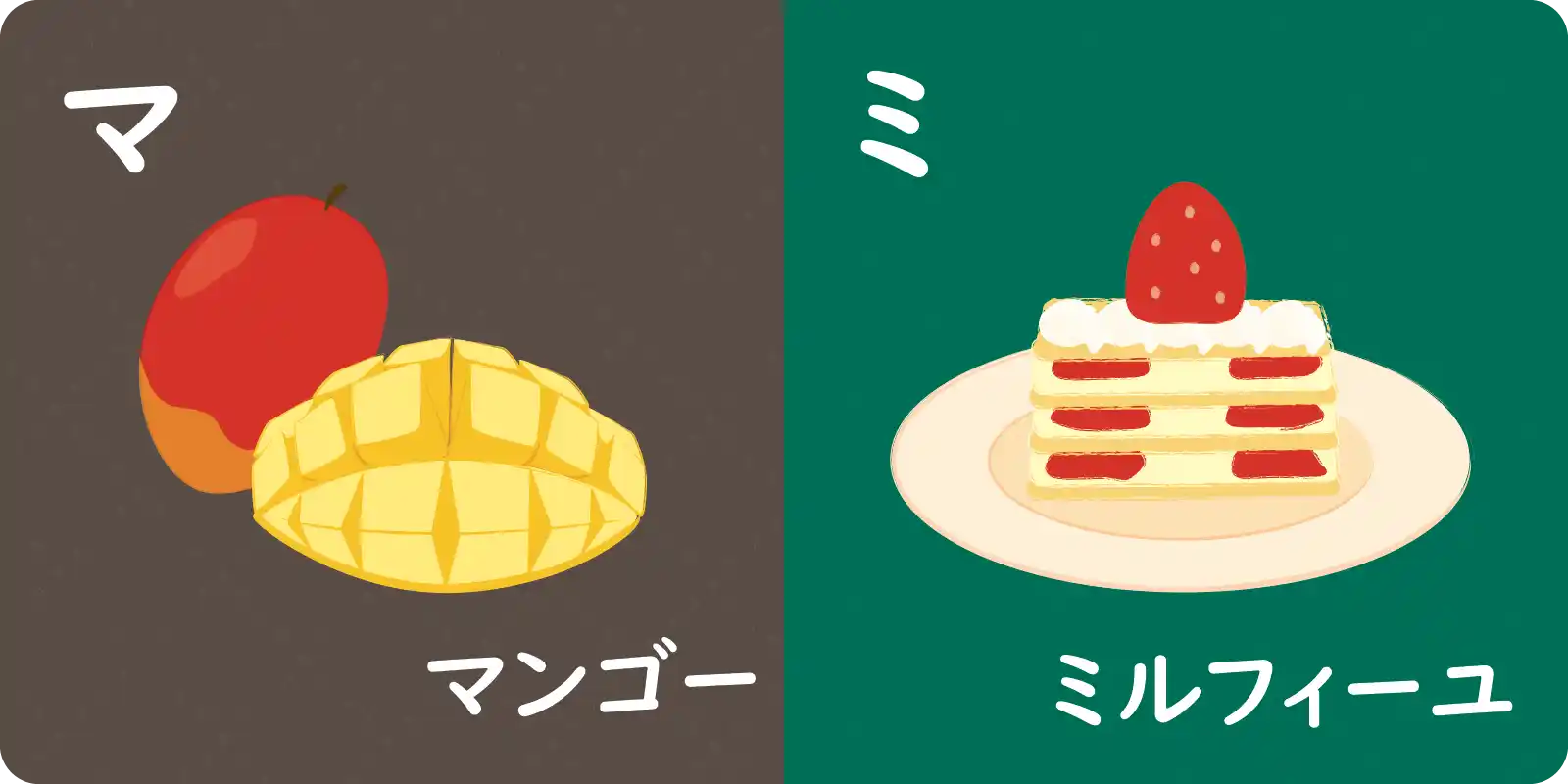
え:ちびこママ
Illustration by Chibiko mama
ミ:ミルフィーユ
millefeuille
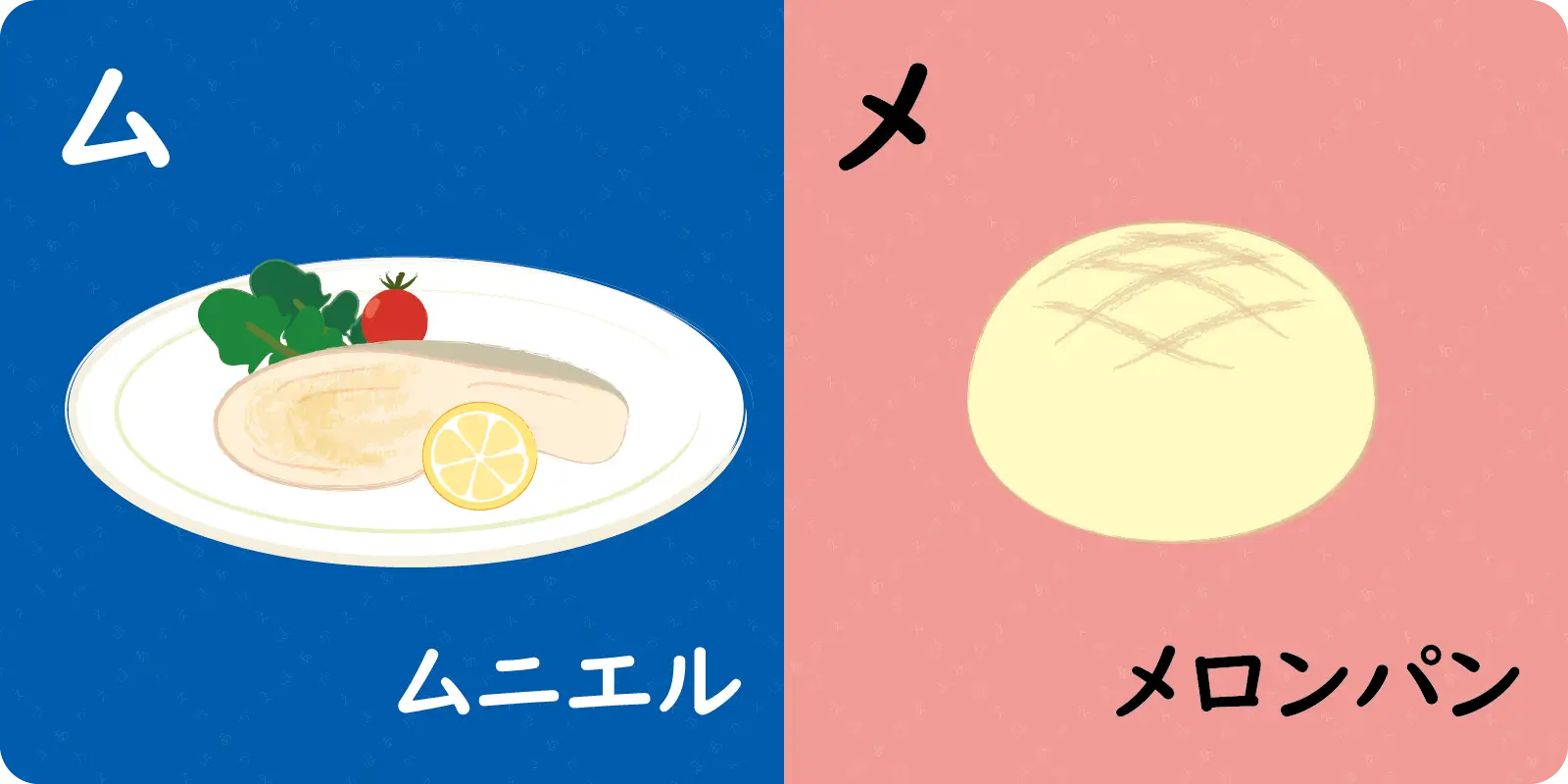
メ:メロンパン
melon pan
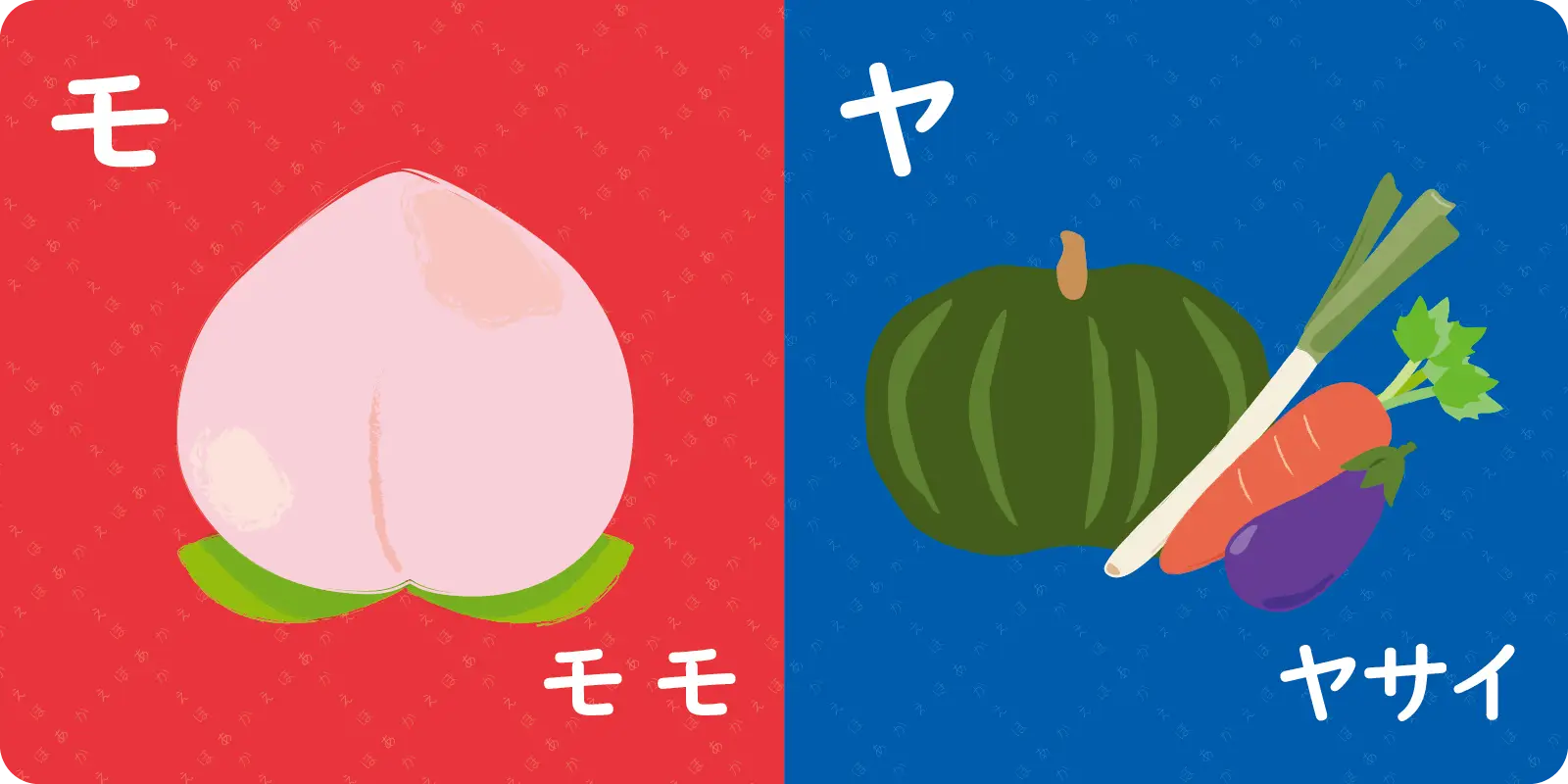
ヤ:ヤサイ
vegetable
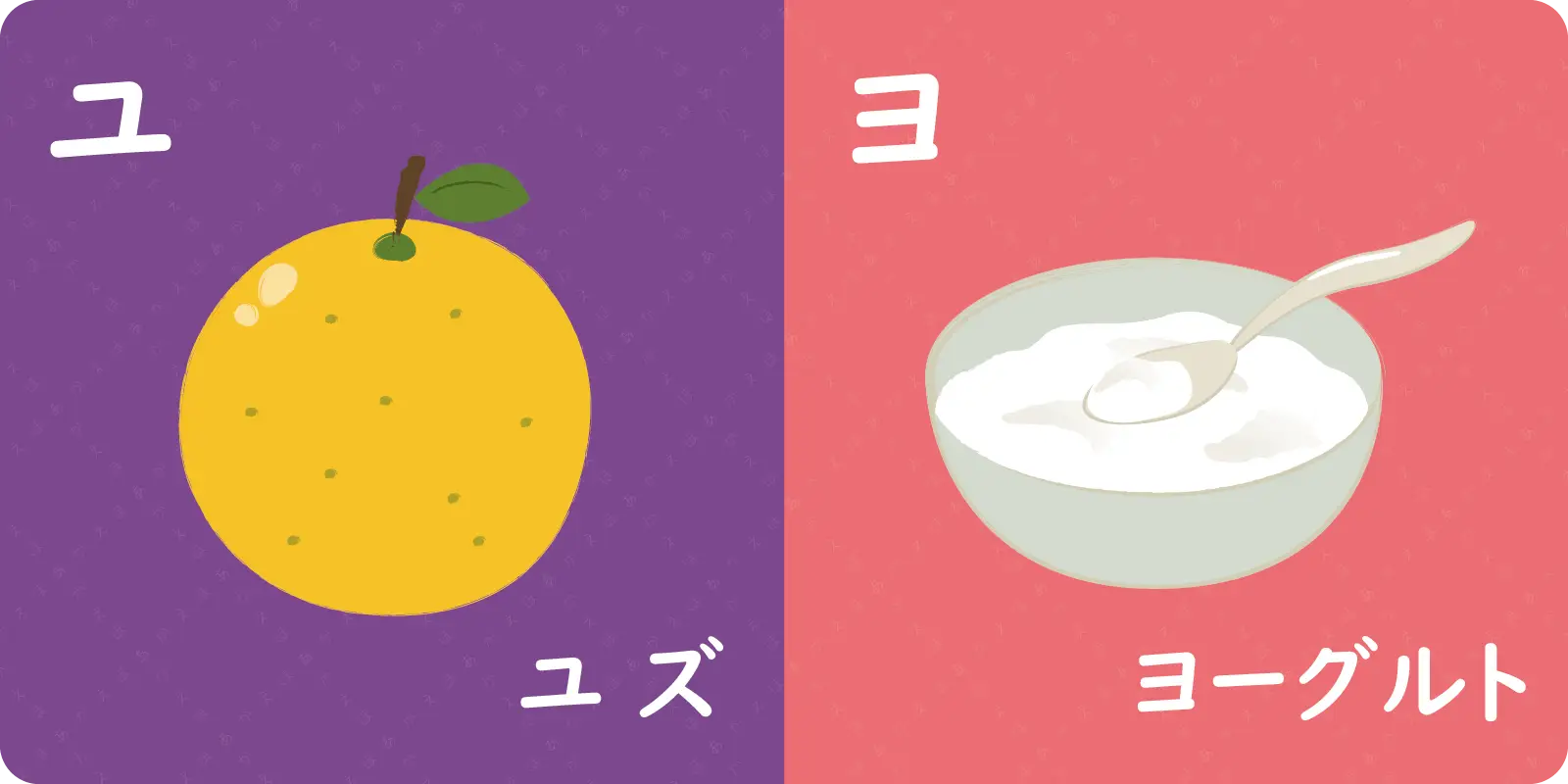
ヨ:ヨーグルト
yogurt
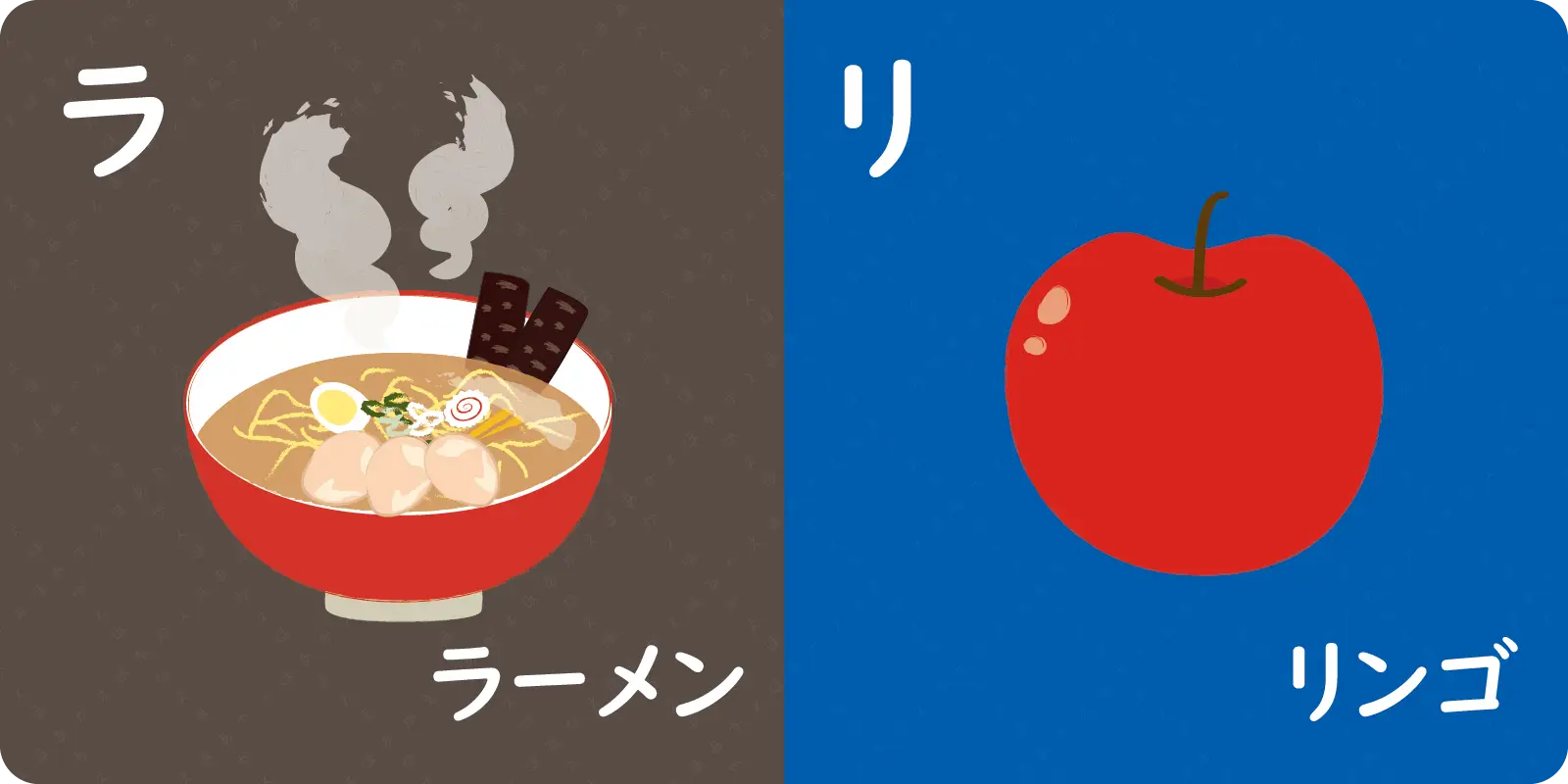
リ:リンゴ
apple
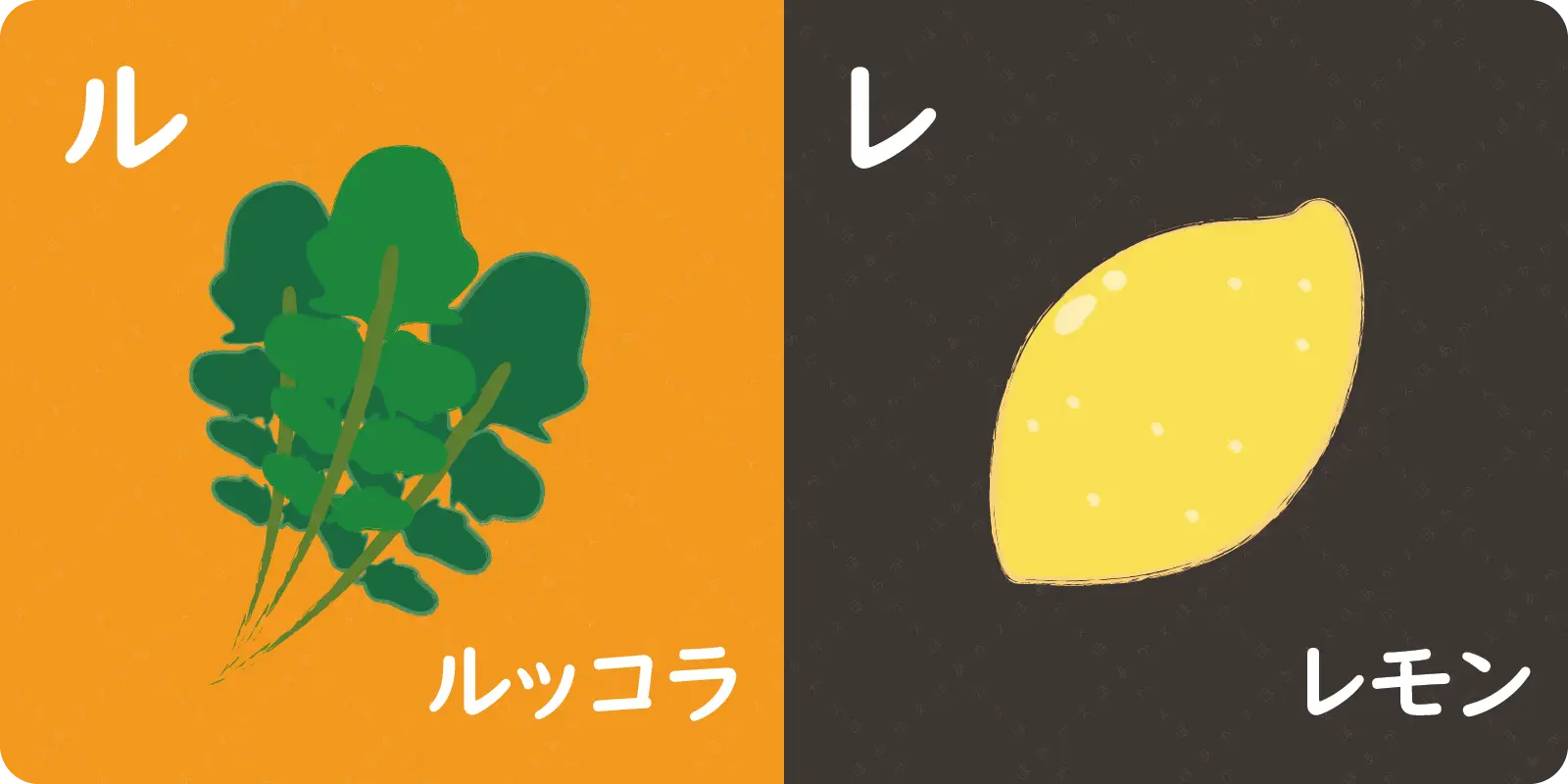
レ:レモン
lemon
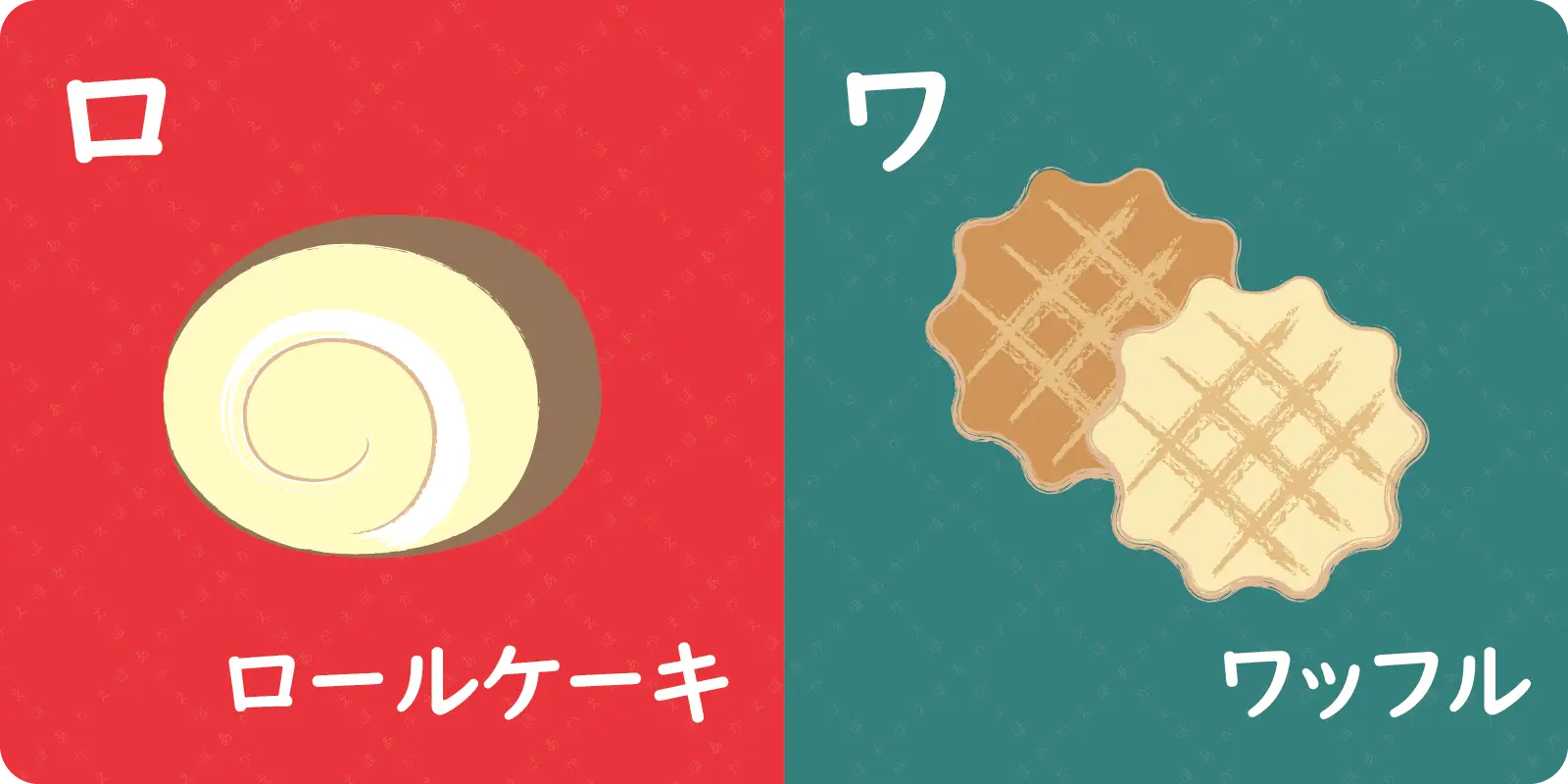
ワ:ワッフル
waffle


おしまい
Note to Readers: About “カタカナ③ マ~ン”
This picture book introduces the Katakana letters from “Ma” to “NN” through illustrations centered on food and food-related items.
Here’s how the text looks when written with kanji or hiragana:
- マンゴー:まんごー(manngoo)
- ミルフィーユ:みるふぃーゆ(mirufiiyu)
- ムニエル:むにえる(munieru) Note 1
- メロン/パン:めろん/ぱん(meronn/pann) Note 2
- モモ:もも、桃(momo)
- ヤサイ:やさい、野菜(yasai) Note 3
- ユズ:ゆず、柚子(yuzu) Note 4
- ヨーグルト:よーぐると(yooguruto)
- ラーメン:らーめん、拉麺(raamenn) Note 5
- リンゴ:りんご、林檎(rinngo)
- ルッコラ:るっこら(rukkora) Note 6
- レモン:れもん、檸檬(remonn)
- ロール/ケーキ:ろーる/けーき(rooru/keeki)
- ワッフル:わっふる(wahhuru)
- カン:かん、缶(kann)
Note 1 Meunière is a French-style way of cooking fish—lightly floured, pan-fried in butter, and finished with lemon.
Note 2 Melon pan is a sweet Japanese bread with a crispy cookie-like top. It doesn’t usually contain melon, but its shape looks like one!
Note 3 “ヤサイ” (vegetable) is written in Katakana here to fit the “Ya” page of the picture book. Normally, this word is written in Kanji (野菜) or sometimes in Hiragana (やさい) in everyday Japanese.
Note 4 Yuzu is a small Japanese citrus fruit with a fragrant aroma and a sour taste.
Note 5 Ramen is a Japanese noodle soup made with wheat noodles served in a hot broth, often topped with meat, vegetables, and other ingredients.
Note 6 Normally, this vegetable is called arugula (US) or rocket (UK) in English. The Japanese word “Rukkora” comes from the Italian word rucola.
