

 Back to Japanese
え・ぶん:ちびこママ
Tap the button to open the flip picture book (ehon).
This page doesn’t include English explanations—try reading in Japanese!
On the flip book page, you'll see four buttons to help you move through the book:
- First(さいしょ) – Go to the front cover.
- Back(もどる) – Return to the previous page.
- Next(すすむ) – Turn to the next page.
- Last(さいご) – Skip to the back cover.
The First(さいしょ), Back(もどる), and Last(さいご) buttons use arrow icons to show direction. But the Next(すすむ) button is special—it’s a little chick  ! If you're not sure which button to press, just follow the chick.
When you find a star icon with the word “おきにいり” (favorite), just tap  ! That book will be saved to your favorites, so you can find it easily next time from the Favorites page!
Prefer English support?
Scroll down to read with explanations
With a  read-aloud button!
It uses your browser’s speech feature.
A robotic voice  reads Japanese text aloud.
The picture book pages include a small navigation menu to help you explore.


On the flip book and PDF download pages, the buttons are labeled in Japanese only—but don’t worry, they’re easy to use. Just try tapping them!
- This picture book is original content by AKAEHO. The copyright of the picture book belongs to AKAEHO and the assigned illustrators.
- The PDF picture book is available for free download for use only in homes, small non-profit groups, and childcare facilities.
- Unauthorized reproduction and secondary use of the picture book and illustrations are strictly prohibited. Some of the illustrations are available for paid purchase. If you wish to use the illustrations for commercial purposes, please purchase them through the paid sites
-> Guide to Illustration Sales - Some of the picture book’s illustrations are distributed in black and white versions on our sister site, “Chibisozai.” They may be used for non-commercial purposes.
A poetic educational picture book that depicts the beauty of the four seasons.
\Reads aloud Japanse text with a robotic voice/

え・ぶん:ちびこママ
Created by Chibiko mama
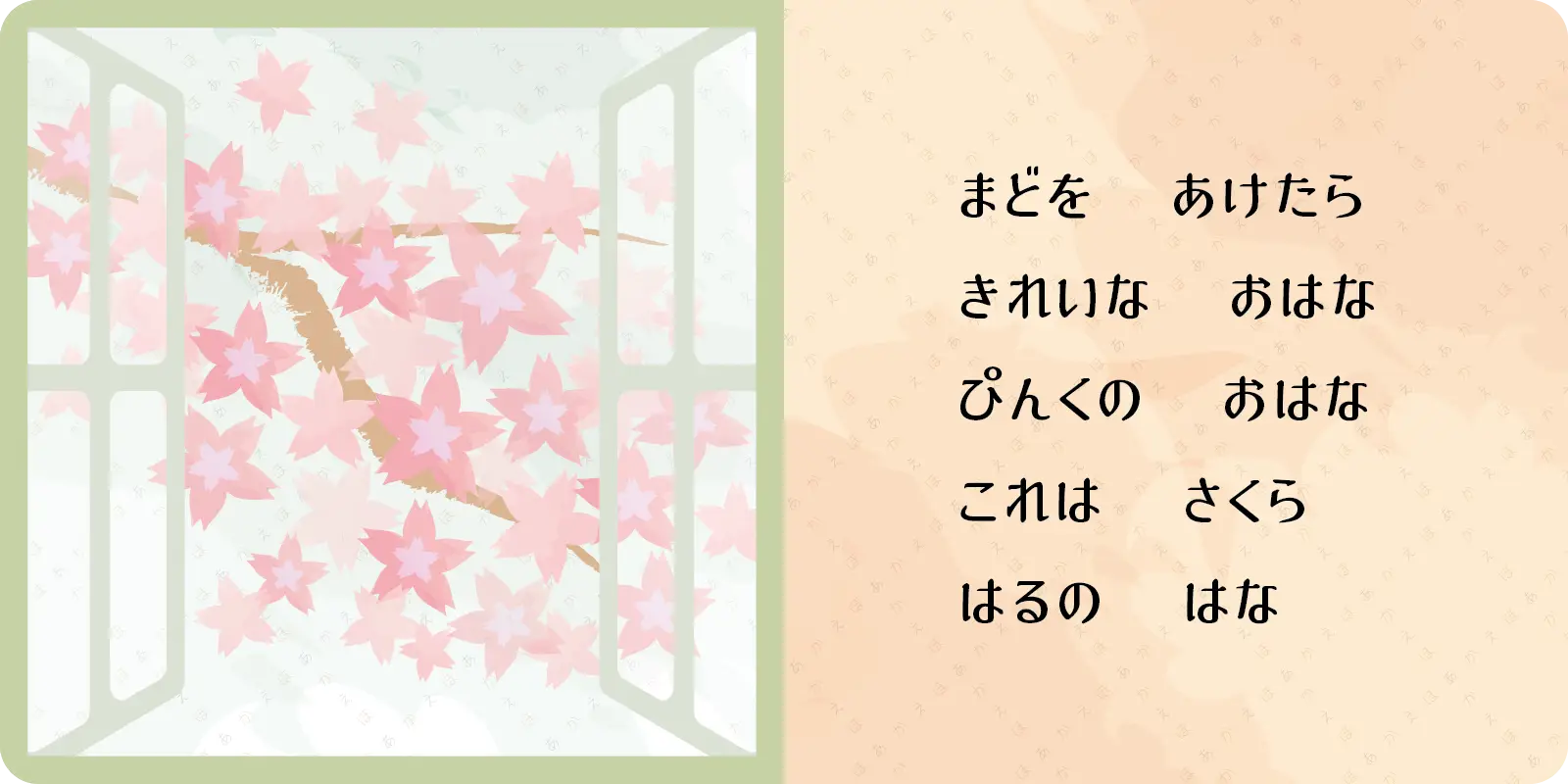
きれいな おはな
ぴんくの おはな
これは さくら
はるの はな
I can see beautiful flowers—
Soft, pale pink flowers.
These are cherry blossoms,
The flowers of spring.
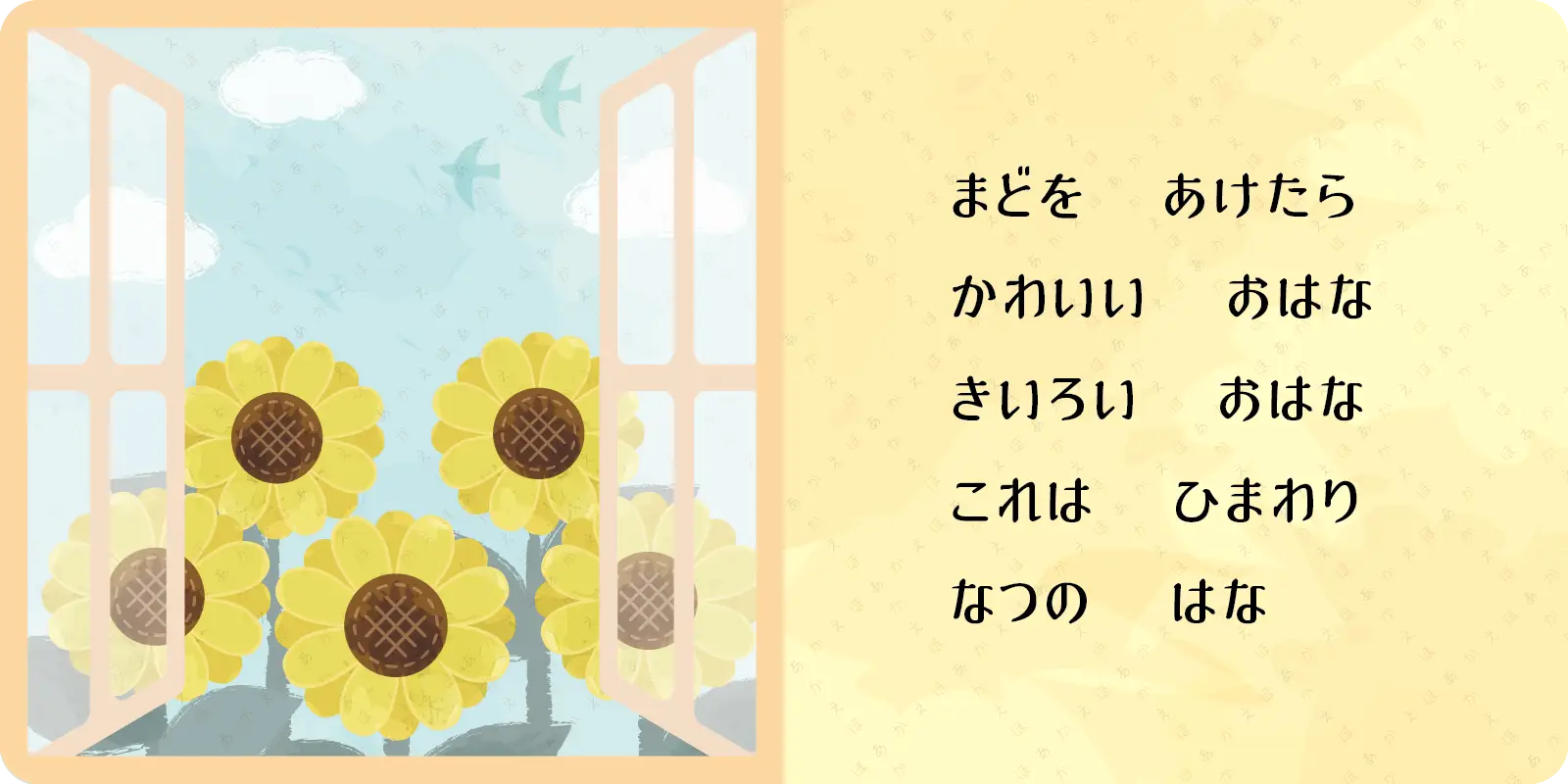
かわいい おはな
きいろい おはな
これは ひまわり
なつの はな
I can see pretty flowers—
Bright yellow flowers.
These are sunflowers,
The flowers of summer.
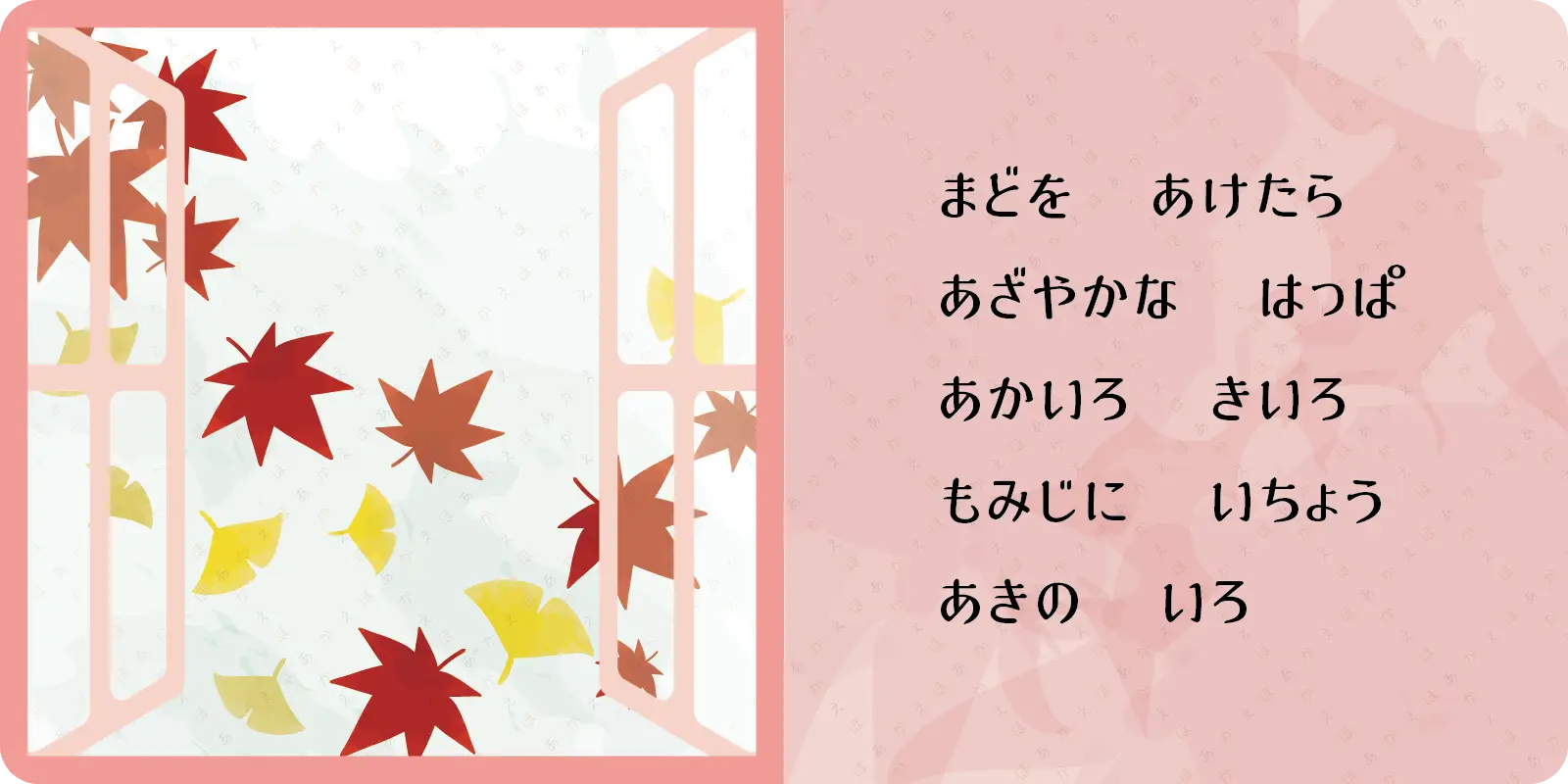
あざやかな はっぱ
あかいろ きいろ
もみじに いちょう
あきの いろ
I can see vivid leaves—
Red and yellow.
Maples and ginkgo trees,
The colors of autumn.
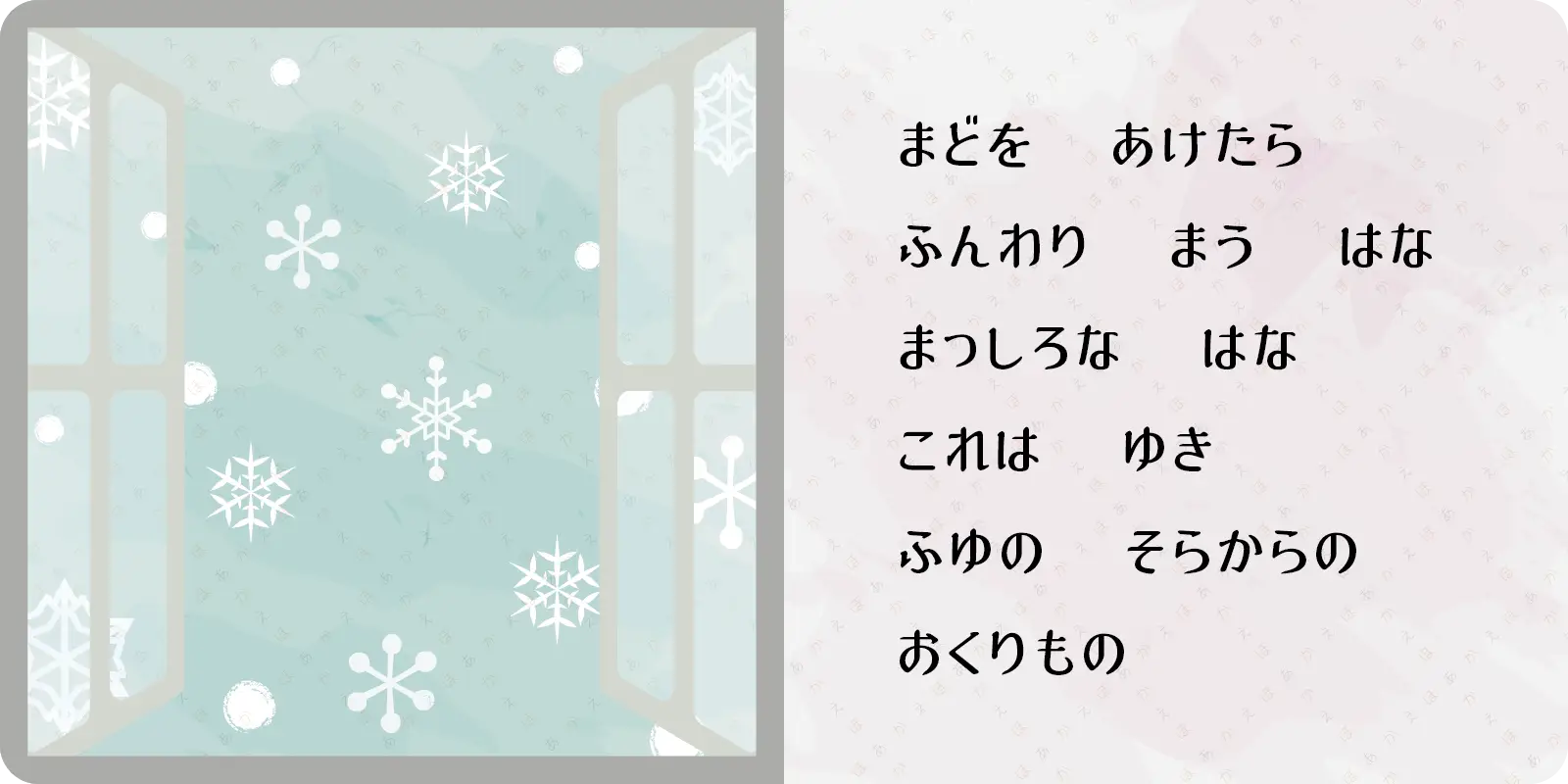
ふんわり まう はな
まっしろな はな
これは ゆき
ふゆの そらからの おくりもの
I can see gentle petals—
Pure white petals.
This is snow,
A gift from the winter sky.

おしまい
Note to Readers: About “まどをあけたら”
This picture book shows the beauty of Japan’s four seasons through simple, poetic words. Each time the window opens, a new scene appears—cherry blossoms in spring, sunflowers in summer, autumn leaves, and winter snow.
Here’s how the text looks when written with kanji or katakana:
- まど/を あけたら:窓/を 開けたら(mado/wo aketara)
- きれい/な お/はな:綺麗/な お/花(kirei/na o/hana) note 1
- ぴんく/の お/はな:ピンク/の お/花(pinku/no o/hana)
- これ/は さくら:これ/は サクラ、桜(kore/wa sakura)
- はる/の はな:春/の 花(haru/no hana)
note 1 In Japanese, the prefix “o” is often added before certain nouns. It makes the word sound more polite or gentle. For example, “hana” means “flower,” but “o-hana” is a more respectful or childlike way to say “flower.”
- まど/を あけたら:窓/を 開けたら(mado/wo aketara)
- かわいい お/はな:可愛い お/花(kawaii o/hana)
- きいろ/い おはな:黄色/い お花(黄色/い o/hana) Note 2
- これ/は ひまわり:これ/は ヒマワリ、向日葵(kore/wa himawari)
- なつ/の はな:夏/の 花(natsu/no hana)
Note 2 In Japanese, the word “kiiroi” (黄色い) means “yellow.” The ending “-i” is a special way to describe colors, turning them into adjectives. Not all colors use this form: 青い aoi (blue), 赤い akai (red), 白い shiroi (white), 黒い kuroi (black), 黄色い kiiroi (yellow), 茶色い chairoi (brown) — only these.
- まど/を あけたら:窓/を 開けたら(mado/wo aketara)
- あざやか/な はっぱ:鮮やか/な 葉っぱ(azayaka/na happa)
- あかいろ きいろ:赤色 黄色(akairo kiiro)
- もみじ/に いちょう:モミジ、紅葉/に イチョウ(momiji/ni ichou)
- あき/の いろ:秋/の 色(aki/no iro)
- まど/を あけたら:窓/を 開けたら(mado/wo aketara)
- ふんわり まう はな:ふんわり 舞う 花(funnwari mau hana) Note 3
- まっしろ/な はな:真っ白/な 花(massiro/na hana) Note 4
- これ/は ゆき:これ/は 雪(kore/wa yuki)
- ふゆ/の そら/から/の:冬/の 空/から/の(fuyu/no sora/kara/no)
- おくりもの:贈り物(okurimono)
Note 3 In Japanese, there are many beautiful expressions that compare snow to flowers. Examples include rikka (六花), sekka (雪花), yuki-no-hana (雪の花), kazahana (風花), and more. In this picture book, snow is imagined as petals softly dancing down, expressed as “funwari mau hana” — “flowers gently fluttering.” In addition, Japanese often uses words like 舞う (mau: to dance), 舞い散る (mai-chiru: to scatter while dancing), 舞い落ちる (mai-ochiru: to fall while dancing) to describe the way snow, petals, leaves, or even the wind drift down gracefully.
Note 4 In Japanese, “masshiro” (真っ白) means “completely white,” emphasizing the whiteness. In the same way, you can say “makkuro” (真っ黒: completely black), “makka” (真っ赤: completely red), “massao” (真っ青: completely blue). These expressions sometimes have figurative meanings. For example, “makkuro” can mean “dirty,” while “makka” and “massao” are often used to describe someone’s facial color — especially when a person looks unwell.
