

 Back to Japanese

え:ちびこママ
Tap the button to open the flip picture book (ehon).
This page doesn’t include English explanations—try reading in Japanese!
On the flip book page, you'll see four buttons to help you move through the book:
- First(さいしょ) – Go to the front cover.
- Back(もどる) – Return to the previous page.
- Next(すすむ) – Turn to the next page.
- Last(さいご) – Skip to the back cover.
The First(さいしょ), Back(もどる), and Last(さいご) buttons use arrow icons to show direction. But the Next(すすむ) button is special—it’s a little chick  ! If you're not sure which button to press, just follow the chick.
When you find a star icon with the word “おきにいり” (favorite), just tap  ! That book will be saved to your favorites, so you can find it easily next time from the Favorites page!
Prefer English support?
Scroll down to read with explanations
With a  read-aloud button!
It uses your browser’s speech feature.
A robotic voice  reads Japanese text aloud.
The picture book pages include a small navigation menu to help you explore.


On the flip book and PDF download pages, the buttons are labeled in Japanese only—but don’t worry, they’re easy to use. Just try tapping them!
- This picture book is original content by AKAEHO. The copyright of the picture book belongs to AKAEHO and the assigned illustrators.
- The PDF picture book is available for free download for use only in homes, small non-profit groups, and childcare facilities.
- Unauthorized reproduction and secondary use of the picture book and illustrations are strictly prohibited. Some of the illustrations are available for paid purchase. If you wish to use the illustrations for commercial purposes, please purchase them through the paid sites
-> Guide to Illustration Sales - Some of the picture book’s illustrations are distributed in black and white versions on our sister site, “Chibisozai.” They may be used for non-commercial purposes.
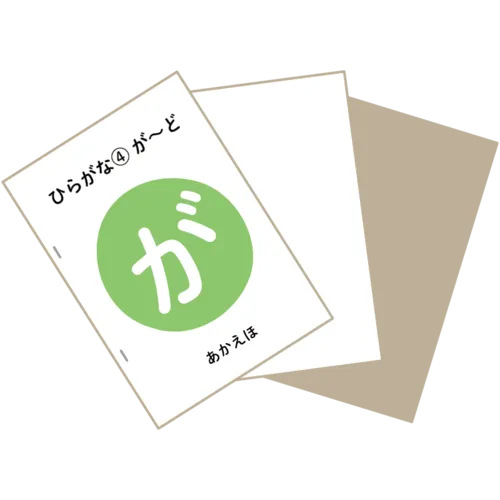
A hiragana picture book that teaches “Ga” to “Do” with cute illustrations.
\Reads aloud Japanse text with a robotic voice/

え:ちびこママ
Illustration by Chibiko mama
ぎ:ぎんなん
ginkgo nut
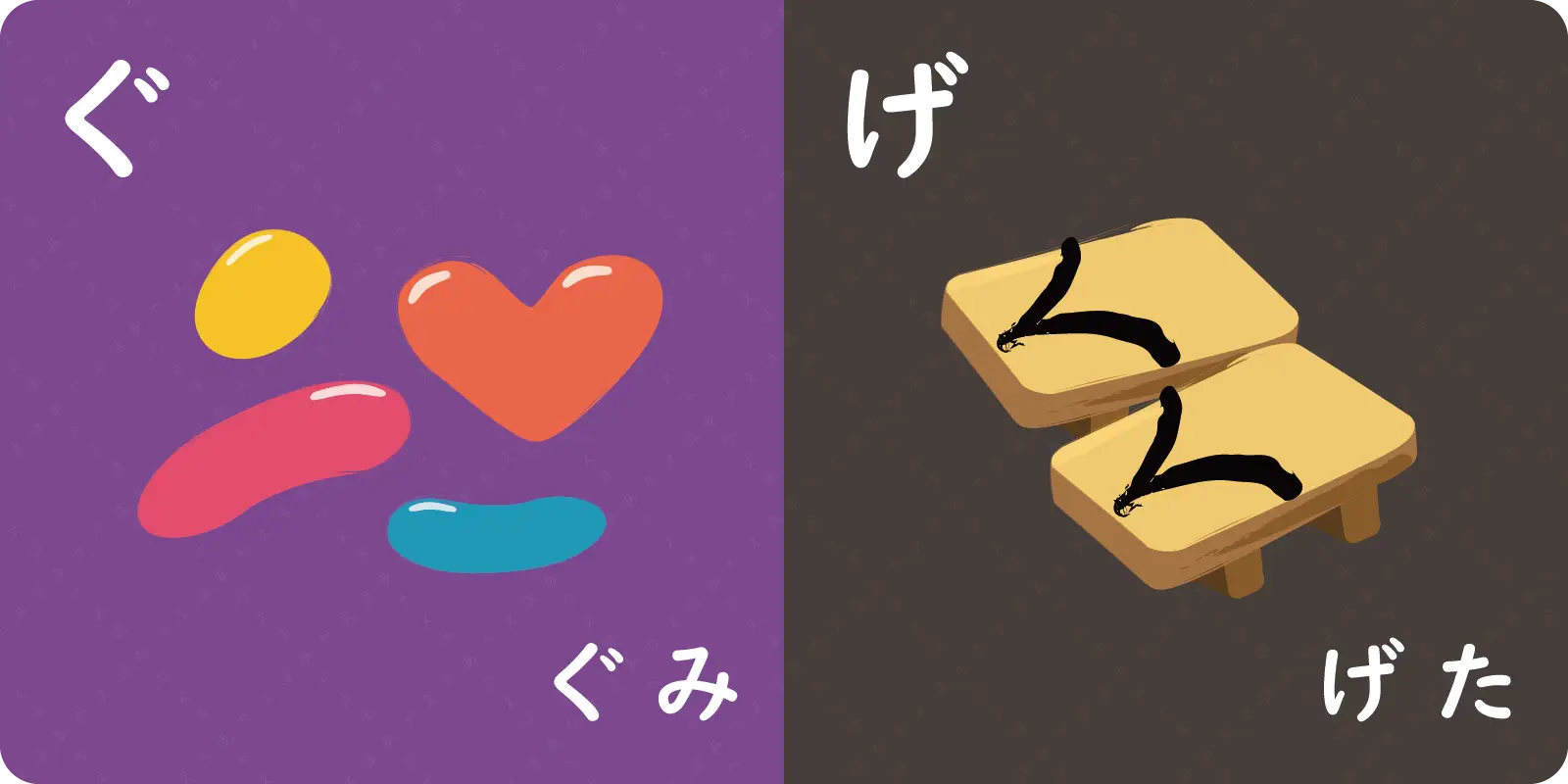
げ:げた
Japanese wooden sandals
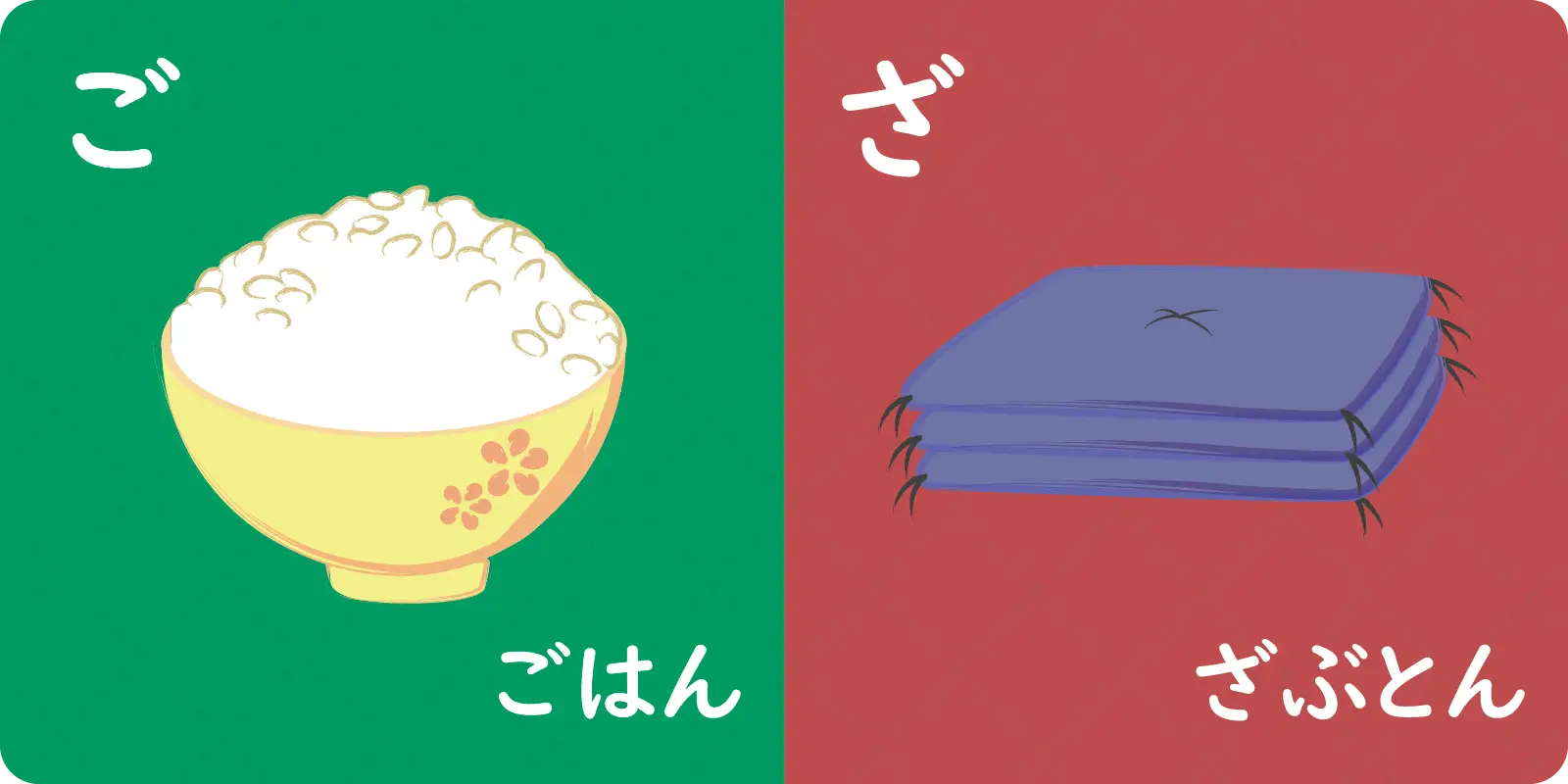
ざ:ざぶとん
Japanese floor cushion
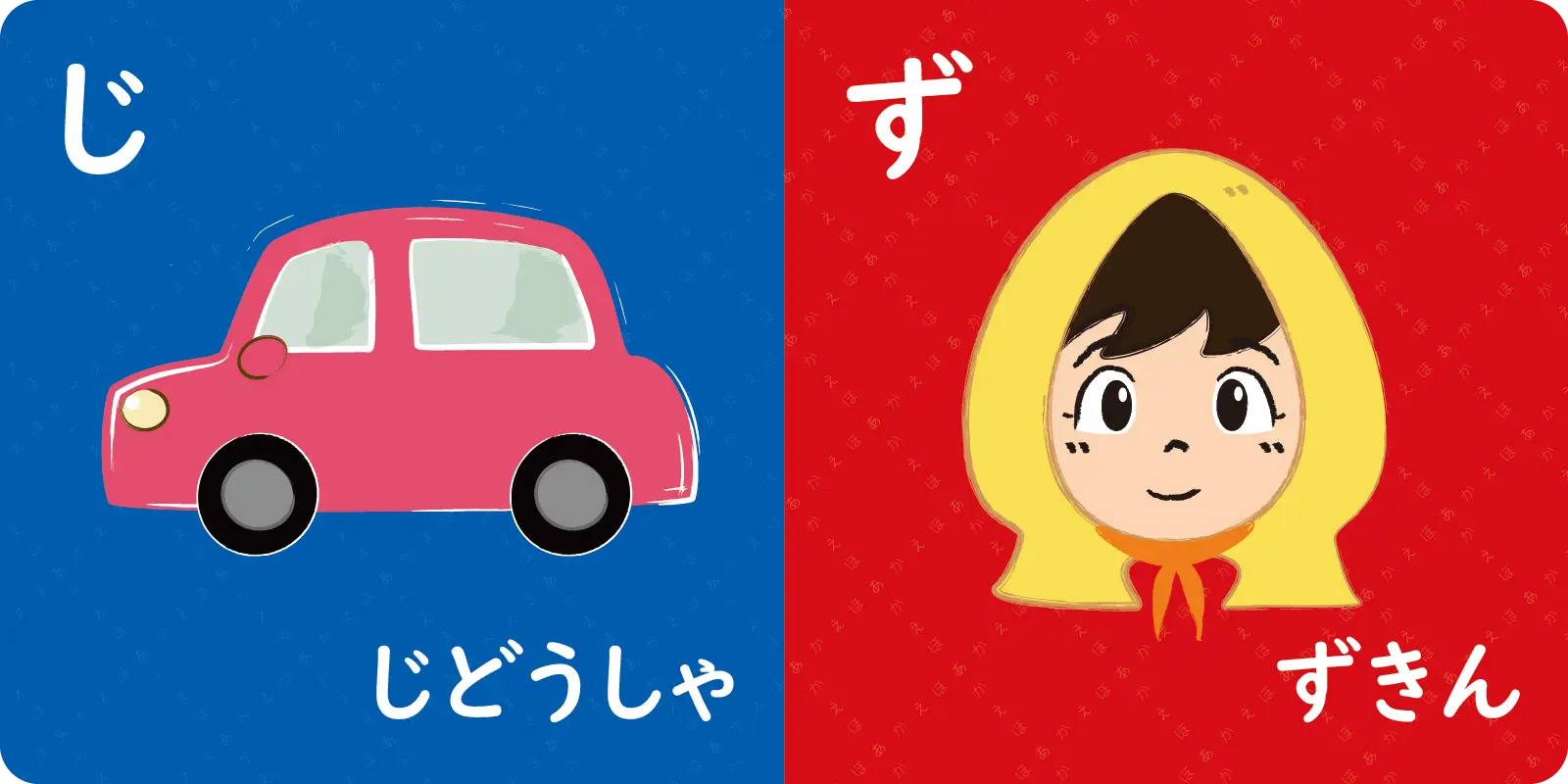
ず:ずきん
hood

ぞ:ぞうきん
cleaning cloth
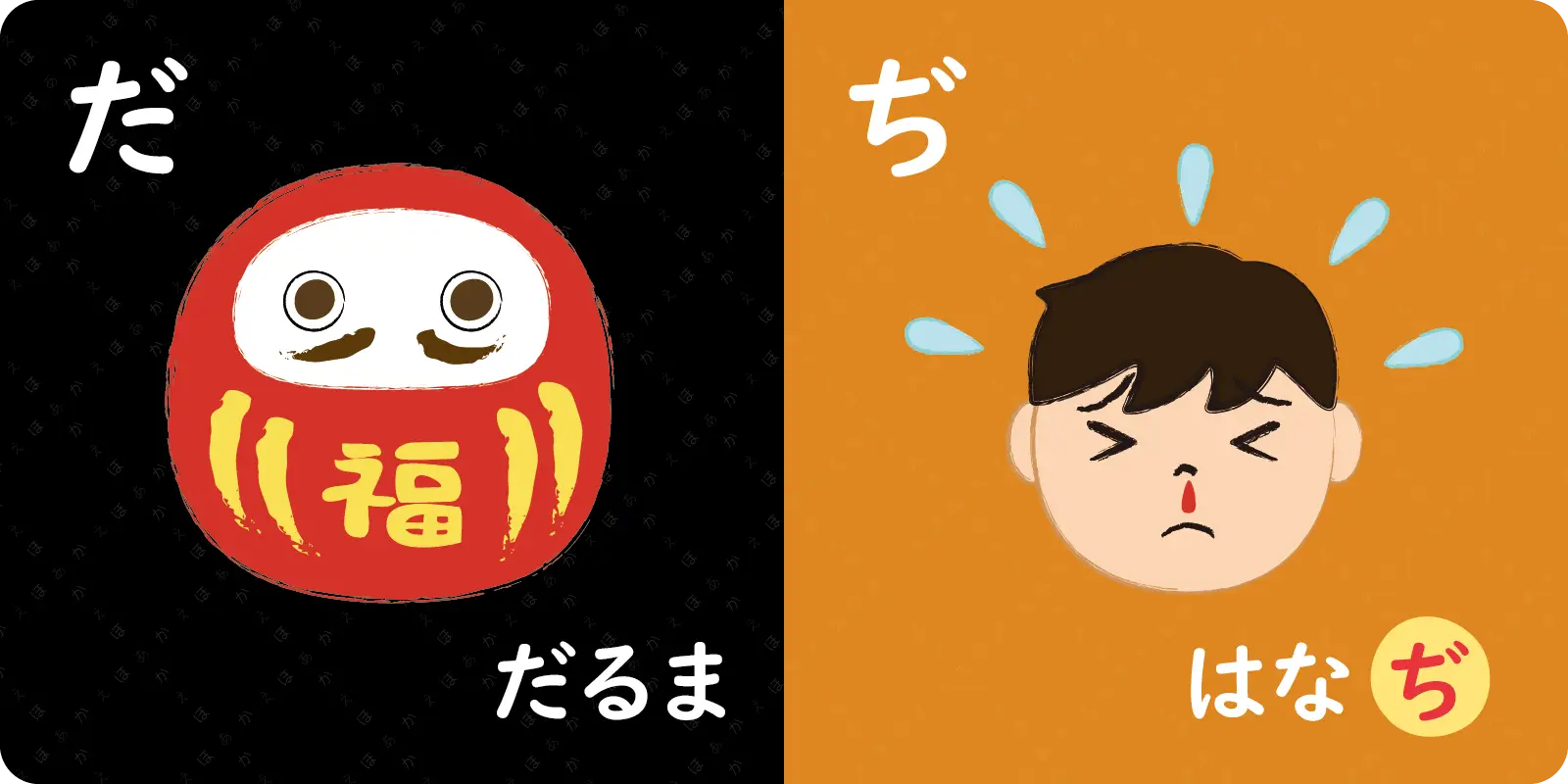
ぢ:はなぢ
nosebleed
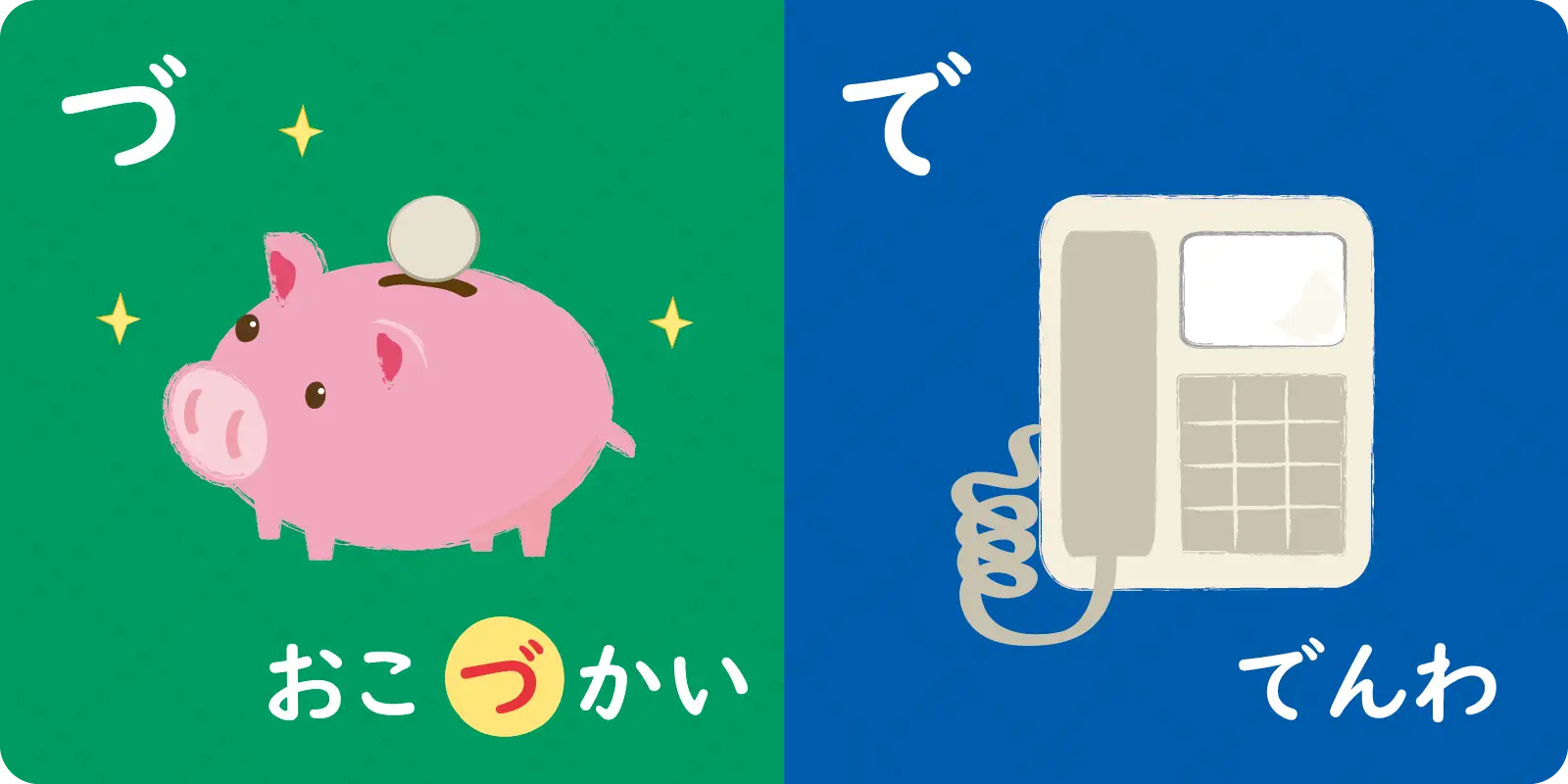
で:でんわ
phone

ど:どなべ
Japanese clay pot

おしまい
Note to Readers: About “ひらがな④ が~ど”
This picture book introduces the hiragana letters from “Ga” to “Do” through illustrations inspired by familiar things for children or uniquely Japanese motifs.
Here’s how the text looks when written with kanji or katakana:
- がっこう:学校(gakkou)
- ぎんなん:銀杏(gin-nan) Note 1
- ぐみ:グミ(gumi)
- げた:ゲタ、下駄(geta) Note 2
- ごはん:ご飯(gohan)
- ざぶとん:座布団(zabuton) Note 3
- じどう/しゃ:自動/車(jidou/sha)
- ずきん:頭巾(zukin) Note 4
- ぜっけん:ゼッケン(zekken)
- ぞうきん:雑巾(zoukin) Note 5
- だるま:ダルマ、達磨(daruma) Note 6
- はなぢ:鼻血(hanaji)
- おこづかい:お小遣い(okozukai)
- でんわ:電話(denwa)
- どなべ:土鍋(donabe) Note 7
Note 1
Ginkgo nuts are a seasonal food in Japan, often used in a dish called chawanmushi (savory egg custard). While they’re part of autumn’s flavor, they can be toxic to young children and should not be eaten before around age five. During Japan’s beautiful fall season, these nuts often fall beneath yellow ginkgo trees—and they have a strong smell, so be careful where you step!
Note 2
Geta are traditional Japanese wooden sandals with thick soles and a thong strap, similar in shape to flip-flops. While fewer people wear kimono in daily life today, many enjoy wearing yukata (light cotton robes) during festivals—and geta are often worn to match. However, geta can be uncomfortable for those not used to them, so modern sandal-style versions inspired by geta have become popular.
Note 3
A zabuton is a traditional Japanese floor cushion used on tatami mats or placed on chairs in places like kindergartens and schools. It’s meant to sit on—especially where there’s no sofa—and is usually square-shaped, thinner than Western-style cushions, and filled with firm cotton for comfortable sitting over long periods. When used on tatami, sitting in the formal seiza position is considered graceful, but outside of settings like tea ceremonies where it’s expected, there’s no need to force it. However, standing on a zabuton is considered bad manners—it’s made for sitting, not stepping!
Note 4
A zukin is a padded hood, similar in shape to the hood of a jacket, designed to protect the head. In Japan, it was originally used during wartime as an air-raid hood. Today, many kindergartens and elementary schools designate it as a disaster-preparedness item. Because Japan experiences frequent earthquakes, children wear zukin when evacuating—to protect themselves from falling objects and other hazards. In daily life, the zukin often takes the form of a seat cushion attached to the back of a chair—ready to transform into a protective hood in case of emergency.

Note 5
A zoukin is a reusable cleaning cloth made by sewing towels together. In Japanese schools, students clean their classrooms themselves, and zoukin are part of their supplies. After long breaks, children are usually asked to bring two or three zoukin. While families used to make them at home, ready-made sets are now sold at 100-yen shops and supermarkets. Just be sure to buy early—they often sell out before school starts!
Note 6
A daruma is a traditional Japanese good-luck doll, usually red and round in shape. It’s modeled after a Buddhist monk named Bodhidharma, who brought Buddhism from India to China. Daruma dolls have no arms or legs, and their faces are large and blank-eyed when sold. As part of a wish-making custom, people draw in the left eye when making a wish, and fill in the right eye once it comes true. Designs vary by region.
Note 7
A donabe is a lidded earthenware pot used in Japan, especially during winter. It’s filled with vegetables, meat or seafood, and simmered with broth to make a warm, shared meal. After most of the ingredients are eaten, noodles or rice are added to the remaining soup for a final course called shime. Many Japanese families and friends enjoy gathering around a heated table (kotatsu) for a cozy donabe party—it’s a beloved winter tradition.
